Best Pickleball Paddle for Tennis Players: What to Know Before You Switch
A tennis player switching to pickleball? Learn what skills transfer, what trips you up, and how to pick the right pickleball paddle for your game.
If you have spent years on the tennis court, picking up a pickleball paddle feels both familiar and completely foreign at the same time. The footwork clicks right away. The scoring system? That takes a minute. The dink? That takes a lot more than a minute.
This guide is written specifically for tennis players making the switch. We will cover what is actually different between the two sports, where your tennis background gives you a real edge, where it quietly works against you, and — most importantly — how to choose a pickleball paddle that complements a tennis-trained game.
Tennis vs. Pickleball: The Key Differences
Before you step on a pickleball court, it helps to understand just how different the game is structurally. A lot of tennis players assume it is just smaller tennis. It is not.
Court Size & Layout
A pickleball court is 20 feet wide by 44 feet long — roughly the size of a doubles badminton court, and about one-quarter the size of a tennis court. The net sits at 36 inches on the sides and 34 inches in the middle (slightly lower than tennis). The biggest structural difference is the Non-Volley Zone (NVZ), also called the kitchen — a 7-foot zone on each side of the net where you cannot volley the ball. That single rule changes everything about how the game is played.
Scoring
Pickleball uses rally scoring in some formats, but the standard recreational and tournament format uses side-out scoring: only the serving team can score a point. Games go to 11 (win by 2), and in doubles you get two serves per side (one for each partner). You also announce the score as three numbers: server score, receiver score, server number. It sounds confusing at first and becomes second nature quickly.
The Equipment
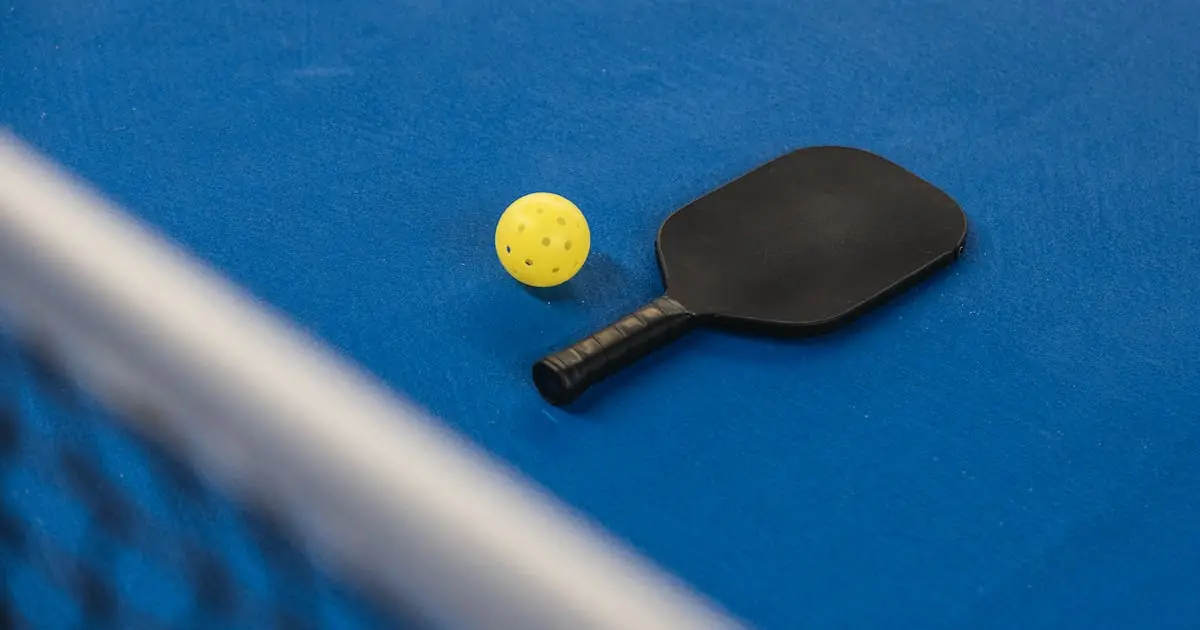
A pickleball paddle is a solid, flat surface — no strings. It is typically made from composite, fiberglass, or carbon fiber, and it is significantly smaller and lighter than a tennis racket. The ball itself is a hard plastic wiffle-style ball with holes, which means it behaves very differently in wind and does not bounce nearly as high as a tennis ball. Spin is possible but works differently — the ball does not grip the surface the way a felt tennis ball does.
Want to go deeper on the sport before focusing on gear? Check out our how to play pickleball guide and our pickleball rules for beginners breakdown.
What Tennis Players Get Right Immediately
Here is the good news: your tennis background gives you a serious head start in several areas.
- Footwork and court awareness: You already understand how to move efficiently, recover to a neutral position, and read an opponent's setup. That translates directly.
- Volley instinct: Tennis players who have played doubles know how to punch volleys without a big backswing. That compact reflex is exactly what you need at the kitchen line.
- Third-shot drop feel: Once you understand what a third-shot drop is supposed to do (arc softly into the kitchen to neutralize the net player), tennis players with touch tend to pick it up faster than pure beginners.
- Competitive mindset: You know how to construct a point, manage pressure, and stay calm during a run. That matters.
What Trips Tennis Players Up
Now the humbling part. There are a few specific things that consistently give tennis converts trouble, and knowing them in advance saves you a lot of frustration.
The Kitchen / Non-Volley Zone
Tennis trains you to be aggressive at the net. In pickleball, charging forward and smashing everything will get you in trouble fast. You cannot volley while standing in or stepping into the NVZ. If your momentum carries you in after a volley, that is a fault — even if it was a great shot. You need to develop patience at the line, and that is genuinely hard to unlearn for former tennis players.
The Soft Game (Dinking)
Dinking is a short, controlled exchange that keeps the ball in the kitchen. It is the heart of advanced pickleball strategy. Tennis players typically want to end points quickly with power. Pickleball rewards the player who can sustain a soft rally without popping the ball up. This requires a completely different grip pressure and paddle angle than anything in tennis — and it takes real practice time before it feels natural.
Grip and Swing Size
Your tennis swing is too big. This is the single most common technical issue with tennis converts. A full groundstroke follow-through in pickleball leads to errors and puts you out of position. The game is played with compact, wrist-stable strokes, especially near the net. You will need to consciously shorten your backswing and resist the urge to muscle the ball.
How to Choose a Pickleball Paddle as a Tennis Player
Your tennis background should directly inform your paddle selection. Here is what actually matters:
Weight
Pickleball paddles range from about 6 oz to 9 oz. Tennis players often gravitate toward heavier paddles (8–9 oz) because it feels more like what they are used to. But heavier paddles are slower to maneuver at the kitchen line and can fatigue your arm faster in a long session. Most tennis converts are better served starting in the mid-weight range (7.5–8.2 oz) and adjusting from there. It gives you enough stability on drives while still being fast enough for soft exchanges.
Grip Size
This is one of the most overlooked factors for tennis players. Tennis grips run large — a standard adult tennis grip is around 4.25 to 4.5 inches. Most pickleball paddles come with a grip circumference of 4.0 to 4.25 inches. That smaller grip encourages more wrist action, which is great for spin but can lead to instability if you are used to a larger handle. Consider adding an overgrip to a standard paddle to build it up to a comfortable feel. Do not just grab the thickest grip available — you still want some wrist mobility for dinking.
Surface Material: Control vs. Power
- Fiberglass/composite faces offer more power and ball speed. They are easier to generate pace with but give you less feel on touch shots.
- Carbon fiber / raw carbon faces offer more control, better spin texture, and a softer feel on dinks. They tend to be preferred by players who rely on placement over power — which is what pickleball rewards at higher levels.
For a tennis player trying to develop a complete game (not just hit hard), a carbon fiber face with a mid-weight core is a smart starting point. It will help you develop the soft game while still performing on drives.
Shape
Elongated paddles (longer reach, smaller sweet spot) can appeal to tennis players because they feel a bit more like a racket. Standard-shape paddles have a larger sweet spot and are generally more forgiving. If you are brand new to pickleball, start with a standard shape. Once your technique tightens up, explore elongated shapes if you want more reach at the baseline.
Browse options on Amazon: pickleball paddles for tennis players →
Also see our full breakdown: Pickleball Paddle Buyer Guide and our roundup of best pickleball paddles for beginners.
Quick Picks by Playstyle
- Power-oriented baseline player: Look for a fiberglass face, mid-to-heavy weight (7.8–8.5 oz), standard or elongated shape. Search fiberglass power paddles →
- Touch and net player: Look for a carbon fiber face, mid-weight (7.2–7.8 oz), standard shape with a textured surface for spin. Search carbon fiber control paddles →
- All-around player still learning: A mid-weight composite paddle in the $60–$120 range is the sweet spot for beginners who do not want to overspend before knowing their preferences.
Final Thoughts
The transition from tennis to pickleball is one of the most common paths into the sport, and for good reason — you already have the athletic foundation. The learning curve is real, but it is mostly about unlearning a few tennis habits rather than starting from zero. Choose a paddle that supports the soft game you will need to develop, dial back the swing, embrace the kitchen, and you will be competing confidently faster than you expect.
More Gear Worth Checking Out
- 🏓 Best Pickleball Paddles for Beginners
- 👟 Best Pickleball Shoes in 2026
- 🟡 Best Pickleball Balls: Outdoor vs Indoor
- 🎒 Pickleball Starter Kit
Browse all pickleball paddles on Amazon →
As an Amazon Associate we earn from qualifying purchases.
Switching sports? Choose by feel first
Tennis players often want power immediately, but your first pickleball paddle should still feel controlled and easy to swing. Compare our best beginner pickleball paddles for forgiving options, and check the senior paddle guide if comfort or arm fatigue is part of the buying decision.
Gear Up & Play Better
Top-rated pickleball gear, picked for all skill levels.
- Best Pickleball Paddles on Amazon →
- Pickleball Balls (Outdoor & Indoor) →
- Court Shoes for Pickleball →
- Pickleball Bags & Cases →
- Portable Pickleball Nets →
As an Amazon Associate we earn from qualifying purchases.
Frequently Asked Questions
Can tennis players use their tennis racket to play pickleball?
No — pickleball requires a solid paddle, not a strung racket. The rules require a paddle with a non-resilient hitting surface. Tennis rackets are not permitted in sanctioned play.
Is pickleball easier to learn for tennis players?
In many ways yes — the athletic foundations transfer well. However, the soft game (dinking, third-shot drops) and the Non-Volley Zone rules require new habits that take deliberate practice to develop.
What grip size should a tennis player use for a pickleball paddle?
Most pickleball paddles come in 4.0–4.25 inch grip circumference, which is smaller than a typical tennis grip. Adding an overgrip to bring it to your comfortable size is a common solution — just avoid going so large that you lose wrist mobility.
Should a tennis player get a heavier or lighter pickleball paddle?
Mid-weight (7.5–8.2 oz) is the best starting point. It provides enough stability for baseline drives while remaining maneuverable at the kitchen line. Very heavy paddles (8.5 oz+) can slow your reaction time on fast exchanges near the net.