
Indoor vs. Outdoor Pickleball: What Every Player Should Know
Indoor vs outdoor pickleball: balls, surfaces, and wind all play differently. Compare costs, footwear, and year-round access to find what suits your game.
Indoor vs. outdoor pickleball: what every player should know
The ball is different. That's where it starts, and once you understand the ball, everything else starts to make sense.
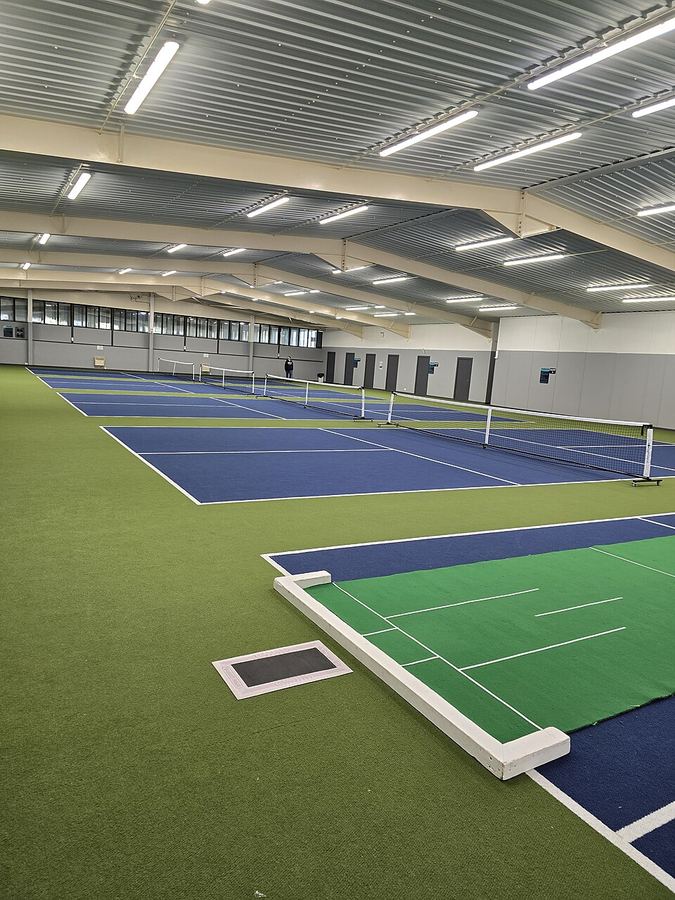
Outdoor balls are harder, heavier, and have smaller holes to handle wind. Indoor balls are softer, lighter, and have larger holes because there's no wind to worry about. Same sport, same basic rules, but a noticeably different feel in your hand and off your paddle.
If you've ever grabbed a ball from the wrong bag and played a full session confused about why your shots felt off, you've already learned this lesson. If you haven't yet, consider this your pre-emptive briefing.
The ball difference (and why it matters more than you think)
Let's get specific. Outdoor pickleballs are typically made of harder plastic with 40 small holes drilled around the surface. That hard plastic survives concrete and asphalt, and the small holes reduce wind resistance so your shots fly true even when it's breezy.
Indoor balls have 26 larger holes and a softer plastic construction. They're designed for smooth gym floors, bounce predictably on hardwood, and move slower through the air — which affects pace and timing.
In practice, this means:
- Indoor balls: Slower game, softer dinks, more spin-friendly. Great for touch shots.
- Outdoor balls: Faster, harder bounces, less spin retention. The game moves quicker.
Neither is "better" — they're optimized for different environments. Switching between them without adjustment will mess with your timing until you recalibrate.
Surface types change everything
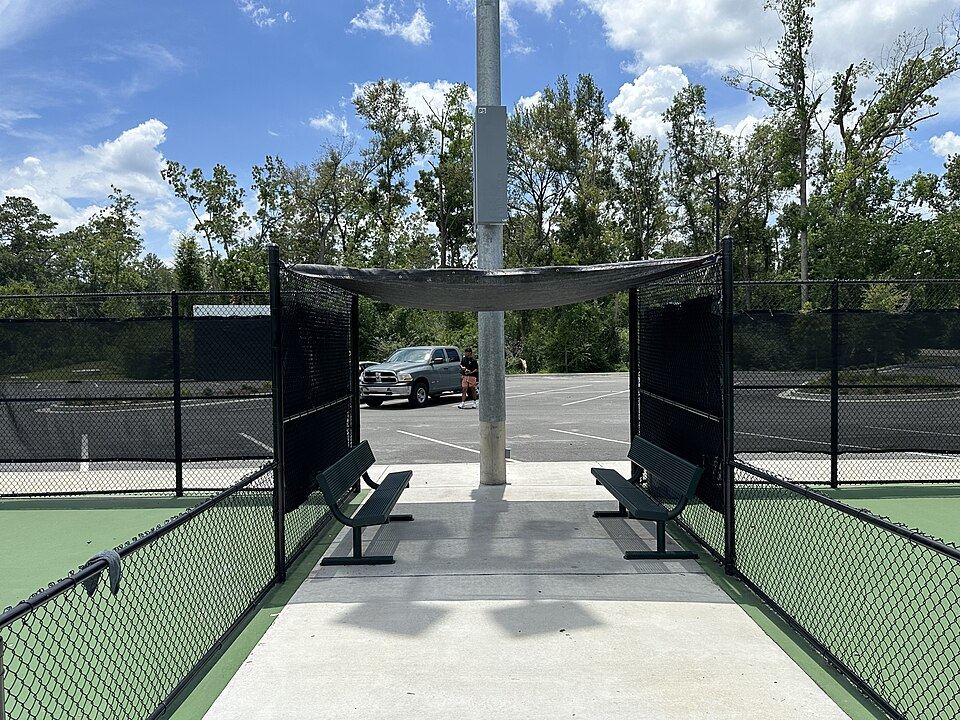
Outdoor courts are usually concrete or asphalt, sometimes with a cushioned acrylic coating. That hard surface means a faster, lower bounce. It's also harder on your joints over time — knees, ankles, and hips feel the cumulative impact of playing on concrete.
Indoor courts are typically hardwood (converted gym floors), sport court tile, or rubberized surfaces. These are significantly more forgiving on the body. The bounce is slightly higher and more consistent, and you can move freely without worrying about uneven pavement or cracks.
Practical tip: If you're dealing with knee or joint issues, indoor play on a gym floor will extend your playing life considerably. The surface difference alone is worth factoring into where you play.
Footwear: don't use the wrong shoes
This is one of the most overlooked aspects of indoor vs. outdoor pickleball, and it genuinely matters.
Outdoor shoes need durable soles to handle rough court surfaces. Look for court shoes with thicker outsoles — tennis shoes work well here. You want lateral support and grip on concrete.
Indoor shoes need non-marking soles with grip designed for smooth gym floors. Running shoes don't cut it — they're designed for forward motion, not the lateral cuts pickleball demands. Dedicated court shoes or volleyball shoes for gym use are your best bet.
Using outdoor shoes on a gym floor can leave marks and is often prohibited. Using indoor shoes outdoors wears out the soles fast. Right tool for the right surface.
Wind: the outdoor variable that changes everything
Wind is the defining challenge of outdoor pickleball that simply doesn't exist indoors. A modest 10-15 mph breeze dramatically affects dinks, lobs, and any ball that spends time in the air.
Playing with the wind: your shots carry further. Aim shorter, hit softer. Opponents' shots coming into the wind will die early — be ready to move forward.
Playing against the wind: your shots need more pace to reach their target. Lobs are risky — the wind may push them long or make them float for an easy overhead.
Experienced outdoor players develop wind-reading as part of their game. They adjust before each point, not mid-rally. Indoor players who venture outside often struggle at first — it's an acquired skill.
Noise: an underrated difference
Pickleball is loud. That distinctive "pop" of the hard outdoor ball on a paddle, echoing off concrete, generates real noise. It's one reason pickleball has drawn community complaints in many neighborhoods — a dozen courts running simultaneously creates significant sound.
Indoor play in a gymnasium is still noisy, but it's contained. The ambient sound bounces around the gym rather than radiating outward. Softer indoor balls also produce slightly less pop.
If you're noise-sensitive or playing somewhere that matters (adjacent to homes, early morning sessions), indoor is the quieter option.
Lighting: playing after dark
Outdoor courts with lights are available but not universal. Many public courts only light some courts, or lights turn off at a set time (often 10 PM). If you play evenings, worth checking before you make the trip.
Indoor facilities almost always have consistent overhead lighting — it's a gym, light is a given. Coverage is generally better than outdoor court lights, with less shadow and more even spread.
Evening pickleball is one of the most popular times to play, and lighting determines whether that's even possible.
Seasonal considerations
Outdoor pickleball is weather-dependent. Rain cancels play immediately — wet courts are slippery and dangerous. Extreme heat in summer can make midday play genuinely punishing (hello, Phoenix in August). Cold winters in northern climates can shut down outdoor play for months.
Indoor pickleball is year-round, climate-controlled, and weather-proof. Many serious players treat indoor courts as their primary option during off-season months, returning outdoors when conditions improve.
If you live somewhere with real winters or brutal summers, access to indoor courts may be what keeps you playing consistently year-round.
Cost differences
Public outdoor courts are usually free. You show up, you play. No membership, no reservation fees, no cost per session.
Indoor courts typically come with costs. Rec center memberships, drop-in fees, or private club memberships are the usual models. Drop-in rates at rec centers often run $3–8; private club sessions can run $10–20+.
The math changes depending on how often you play. If you're playing 4-5 times a week, a monthly membership often makes more sense than per-session fees. For casual players, free outdoor courts can be hard to beat.
Which is better for beginners?
Indoor play tends to be more forgiving for beginners. The slower ball, softer surface, and absence of wind make it easier to work on fundamentals without fighting external variables. Consistency is easier to find indoors.
That said, outdoor public courts are where most beginners start — they're free and accessible. If you're teaching yourself, outdoor open play is a perfectly fine starting point. Just know that when you eventually play indoors, the game will feel a little different.
Skill development differences
Players who exclusively play one environment sometimes struggle to transfer their game.
Pure indoor players who venture outside often find their pace is off — outdoor balls move faster, the bounce is lower, and wind disrupts carefully practiced dinks. The game adapts, but it takes time.
Pure outdoor players who move inside sometimes find the slower rhythm requires adjustment. They're used to hitting with more pace and find the softer indoor ball doesn't respond the same way.
The best players play both. Varying your environment forces adaptability and reveals weaknesses in your game. If you only play indoors, you never develop wind management. If you only play outdoors, you may miss the touch-shot nuance that indoor play rewards.
Find indoor and outdoor pickleball courts near you
Whether you prefer climate-controlled indoor courts or the open-air experience of outdoor play, PickleballCurator.com has you covered. Browse courts in top pickleball cities:
- Miami pickleball courts, year-round outdoor paradise
- Scottsdale pickleball courts, desert outdoor play at its best
- Denver pickleball courts, strong indoor scene for winter play
- Seattle pickleball courts, indoor-friendly for rainy season
The bottom line
Indoor and outdoor pickleball aren't the same game, even though the rules are identical. The ball, surface, footwear, environment, cost, and strategy all shift between them. Understanding those differences makes you a better, more versatile player.
Looking for courts near you, indoors or out? Search PickleballCurator.com to find courts in your area filtered by indoor or outdoor, and get out there and play.
Related reading: Also check out our guides on how to find pickleball courts near you and the pickleball starter gear guide.
Gear Up & Play Better
Top-rated pickleball gear, picked for all skill levels.
- Best Pickleball Paddles on Amazon →
- Pickleball Balls (Outdoor & Indoor) →
- Court Shoes for Pickleball →
- Pickleball Bags & Cases →
- Portable Pickleball Nets →
As an Amazon Associate we earn from qualifying purchases.
Frequently Asked Questions
Is it better to play pickleball indoors or outdoors?
Each has advantages. Indoor courts offer climate control and consistent conditions, making them ideal for year-round play. Outdoor courts are typically free, more accessible, and provide a different playing experience with wind and sun as factors. Many players enjoy both.
What is the difference between indoor and outdoor pickleball balls?
Outdoor pickleball balls have smaller holes (40 total) and are made of harder plastic to withstand wind and rougher surfaces. Indoor balls have 26 larger holes and are made of softer plastic for better control on smooth indoor surfaces.
Can you use an outdoor pickleball ball indoors?
You can, but it's not ideal. Outdoor balls are harder and bounce differently on indoor surfaces, making the game faster and harder to control. For the best indoor experience, use indoor-specific pickleball balls.
How much does it cost to play indoor pickleball?
Indoor pickleball typically costs $3-$15 per session at recreation centers, or $50-$150 per month for club memberships. Prices vary widely by location and facility type.
