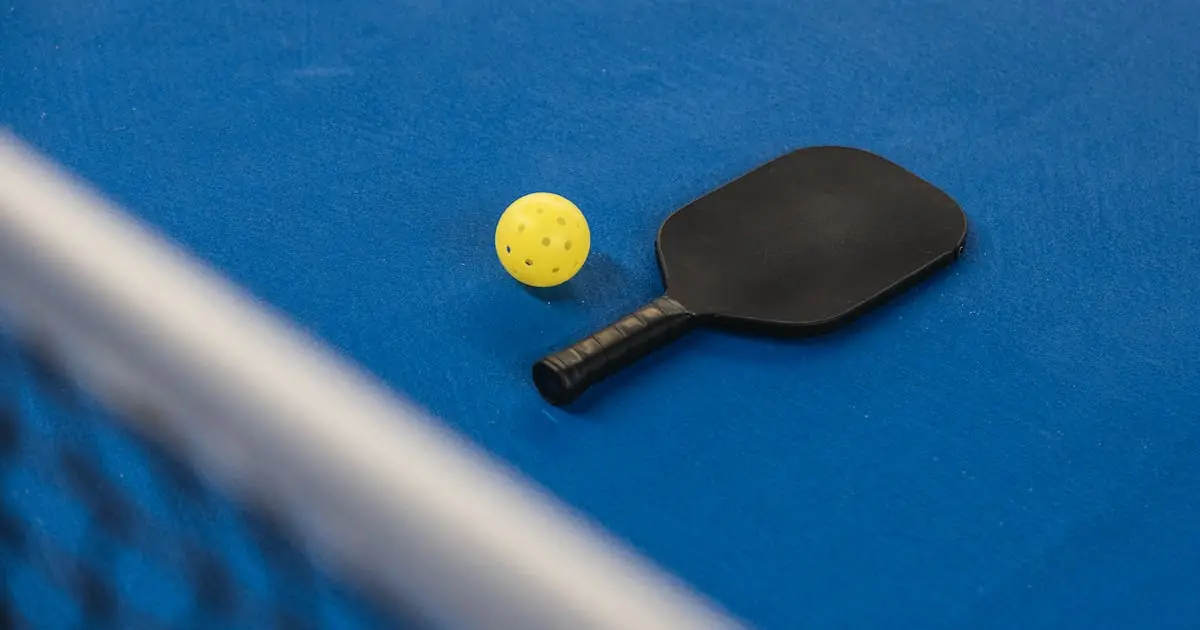
A practical guide to pickleball paddle weight: common ranges, how weight affects speed and stability, and simple lead tape placements to fine tune feel.
Choosing a pickleball paddle weight is one of the fastest ways to change how your game feels without changing your swing.
If you have ever borrowed a friend’s paddle and immediately thought “wow, this is effortless” or “why does this feel like a brick,” you already understand the tradeoff. Lighter paddles accelerate quickly and feel lively at the net. Heavier paddles tend to feel steadier, hit a heavier ball, and help on blocks, but they can also fatigue your arm faster.
This guide breaks down common weight ranges, who they work best for, and simple ways to fine tune a paddle with lead tape so you can get the feel you want.
## Quick weight ranges (and what they feel like)
Most paddles fall into a few practical buckets. There is no universal standard, but these ranges are close enough for shopping and comparing models.
- **Lightweight: ~7.0 to 7.7 oz**
- Fast hands, quick resets, easy to whip through speed ups
- Can feel less stable on hard drives and counters
- **Midweight: ~7.8 to 8.4 oz**
- The most common “all around” zone
- Good blend of stability and hand speed for most recreational players
- **Heavy: ~8.5 oz and up**
- More plow through and stability on blocks and volleys
- Can feel slower in fast exchanges and may increase fatigue
If you do not know where to start, **midweight is the safest default** for most players.
## How paddle weight changes your game
### 1) Hand speed at the kitchen line
In quick dink battles and hands exchanges, the ability to get the paddle in position matters. A lighter paddle is usually easier to accelerate and stop, which helps with:
- Quick counters after a speed up
- Last second flicks and rolls
- Emergency resets when you are jammed
If you love fast exchanges or you are often late to the ball, dropping weight can be a meaningful upgrade.
### 2) Stability and “plow through” on blocks
When a hard ball hits your paddle, a heavier setup tends to deflect less. That stability helps on:
- Blocking drives in the transition zone
- Punch volleys
- Defensive hands battles against heavy hitters
If your paddle feels like it gets pushed around, you may benefit from a bit more weight or a more head heavy balance.
### 3) Power, depth, and serve/return pace
Weight alone does not create power, technique matters most, but added mass can help you send a heavier ball with less effort. Many players notice:
- Deeper serves and returns with the same swing
- More consistent depth on drives
- Less need to “muscle” the ball
The downside is that a heavier paddle can encourage over swinging if you are chasing pace.
### 4) Touch and soft game control
Touch is not only about weight, but weight changes feedback. Some players feel a heavier paddle is calmer and more predictable on dinks. Others prefer the responsiveness of a lighter paddle for finesse.
If your soft game feels inconsistent, do not assume weight is the issue. But if you feel late or unstable, weight and balance are worth testing.
## Weight vs balance: swing weight matters more than people think
Two paddles can weigh the same on a scale and still feel very different in motion.
- **Overall weight** is the number on the spec sheet.
- **Balance (head heavy vs handle heavy)** changes how heavy the paddle feels when you swing.
A slightly heavier paddle that is more handle heavy can feel quicker than a lighter paddle that is head heavy.
When you are comparing paddles, pay attention to where the weight is distributed, not only the ounces.
## What weight should you choose?
### If you are brand new to pickleball
Start with **midweight** unless you have a history of arm or shoulder issues. Midweight gives you stability while you learn good mechanics.
If you are sensitive to fatigue or you are rehabbing an injury, consider the light end of midweight or a true lightweight.
### If you play mostly doubles and live at the kitchen
Many doubles focused players prefer **light to midweight** for faster hands. If your game is built on dinks, resets, and quick counters, you will feel the benefit.
### If you play singles or you love driving
Singles and aggressive baseline styles often do well with **midweight to heavy** because stability and depth matter.
### If you have tennis elbow or recurring arm pain
Do not guess. A heavier paddle is not automatically worse, but extra swing weight can increase stress for some players.
Practical steps:
- Avoid sudden jumps in weight
- Favor a grip size and overgrip that feel comfortable
- If you add lead tape, add small amounts and test for a few sessions
If pain persists, talk to a clinician and consider technique coaching. Equipment should not be your only fix.
## How to fine tune a paddle with lead tape (simple, safe adjustments)
Lead tape (or tungsten tape) is the easiest way to adjust feel without buying a new paddle. Add weight in small steps. Even **2 to 4 grams** can be noticeable.
### Add stability (bigger sweet spot feel)
Place tape on the **sides** of the paddle, roughly around the 3 o’clock and 9 o’clock areas.
- Pros: more stability on off center hits
- Cons: increases swing weight a bit
### Add more “plow through” and power
Place tape nearer the **top** of the paddle.
- Pros: more pop on drives and putaways
- Cons: can slow hands and increase fatigue
### Keep hands quick (more handle heavy feel)
Place tape lower, nearer the **throat** area.
- Pros: adds overall mass without as much swing weight
- Cons: smaller effect on off center stability
After any change, play at least one full session before deciding. Your timing adapts.
## A simple decision checklist
Use this quick checklist if you are stuck:
- You feel late at the net or your paddle feels slow: **go lighter** or avoid head heavy builds
- Your paddle gets pushed around on blocks: **add stability** (side tape) or try slightly heavier
- You struggle to hit deep serves/returns without swinging hard: **try a bit more weight**
- Your arm gets tired quickly: **reduce swing weight** and build up gradually
## Where PickleballCurator fits in
PickleballCurator helps you spend more time playing and less time hunting for a good run. Our directory lists courts with addresses, amenities, and real player ratings, so when you are testing a new paddle setup you can find a consistent place to practice and track what actually changes your results.
If you are traveling or moving, browse the site’s court listings and pick a few locations with similar court surfaces so your comparisons stay fair.
## FAQs
### What is the best pickleball paddle weight for beginners?
Most beginners do best with a **midweight paddle (about 7.8 to 8.4 oz)** because it balances stability and hand speed while you learn consistent contact.
### Is a heavier pickleball paddle better for power?
A heavier paddle can help you produce a heavier ball with the same swing, but technique matters more. Too much weight can also slow your hands in fast exchanges.
### Will a lighter paddle help my dinks and resets?
Often, yes. Lighter paddles are easier to accelerate and stop, which can improve reaction time on resets and quick exchanges at the kitchen.
### How much lead tape should I add to a pickleball paddle?
Start small, usually **2 to 4 grams total**, and test for at least one full session. Add weight gradually and pay attention to timing and arm fatigue.
Want beginner paddles in the right weight range?
After you compare light, midweight, and heavy paddles, review our best pickleball paddles for beginners picks for forgiving first paddles that keep weight and control manageable.
Choosing paddle weight for comfort
If you are using this weight guide because your arm, wrist, or shoulder gets tired, the next comparison to read is our senior-friendly pickleball paddle guide. It focuses on lighter swing weight, comfort, and control. New players can also cross-check our beginner paddle picks for forgiving first-paddle options.
After choosing weight, dial in the feel
Weight is only one part of paddle feel. A fresh overgrip can make the same paddle feel more secure, while regular cleaning helps textured faces keep their bite. See our paddle cleaning routine before you replace a paddle that only needs care.
Compare pickleball overgrips on Amazon →
As an Amazon Associate we earn from qualifying purchases.